
Advantage #1: Develop True, Usable Strength for Everyday Tasks
To explore how these training methods can complement your fitness goals, check out our in-depth guide on functional health at Wutawhealth.
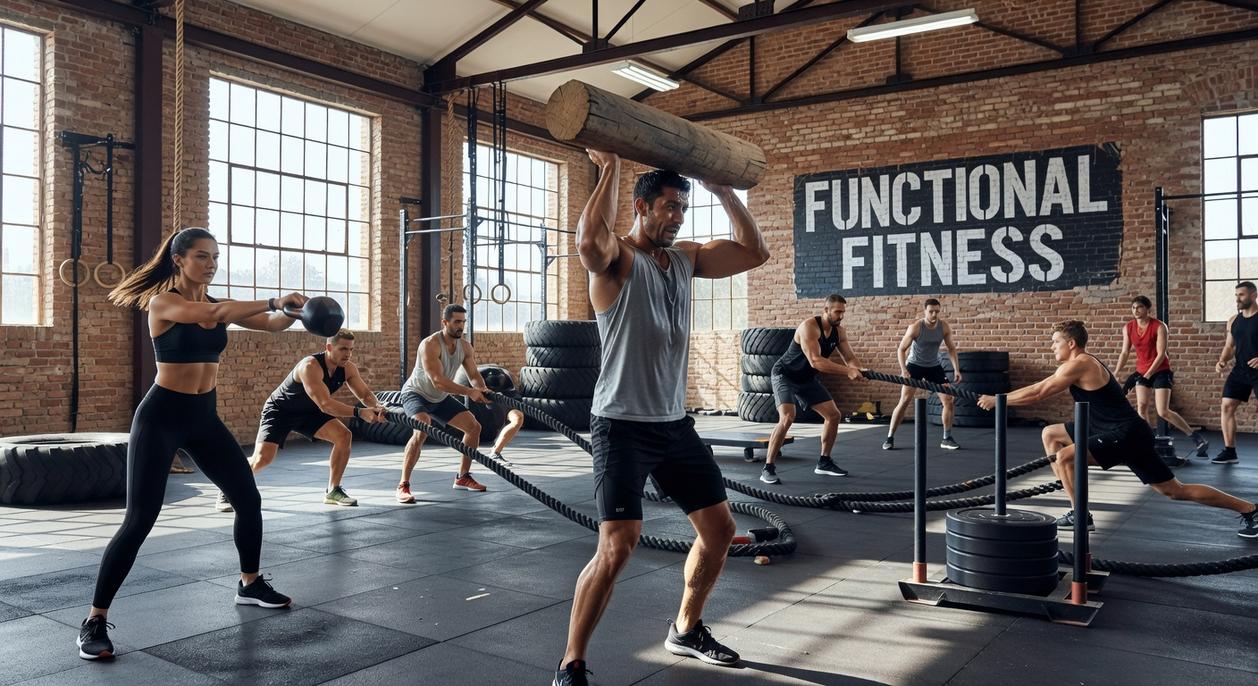
Most people think strength means lifting the heaviest barbell in the room. That’s impressive—sure. But true strength is about coordination and stability, not just max weight. In other words, it’s how your muscles function together as a system (like an ensemble cast, not a solo act).
For example, a deadlift doesn’t just train your legs—it teaches you how to hinge at the hips and brace your core so you can lift a heavy box without wrecking your back. Research in the Journal of Strength and Conditioning Research shows compound movements improve intermuscular coordination, meaning muscles fire more efficiently together (JSCR, 2014).
Likewise, a farmer’s walk builds grip and core strength so you can carry all the grocery bags in one trip (because two trips are overrated). An overhead press prepares you to lift a suitcase into an overhead bin without that awkward mid-air wobble.
Now here’s the contrarian take: machines aren’t “safer” just because they isolate muscles. In fact, isolated movements often neglect stabilizers, which are critical for real-world resilience. Engaging multiple large muscle groups at once also boosts metabolic conditioning, increasing calorie burn and cardiovascular demand compared to single-joint exercises (American Council on Exercise, 2015).
That’s the real power behind functional training benefits.
Move Better, Feel Stronger, Live Fuller
You don’t train just to sweat. You train to live better.
By now, you understand that the advantages of functional exercises go far beyond the gym. They build real-world strength, support injury prevention, and improve mobility in ways that actually show up in your daily life. The functional training benefits aren’t about looking good in the mirror — they’re about moving through life with confidence and control.
It’s time to stop separating your “gym life” from your “real life.” A workout should prepare you to lift groceries, climb stairs, play with your kids, and handle unexpected physical demands — not just make you better at isolated reps.
When you train movements instead of just muscles, you create a body that’s strong, coordinated, and resilient from head to toe.
Now take action. Choose one functional exercise from this article and add it to your next workout. Feel the difference for yourself. Your body deserves training that works as hard as you do.

 Elviana Vosswyn writes the kind of nutrition and recovery approaches content that people actually send to each other. Not because it's flashy or controversial, but because it's the sort of thing where you read it and immediately think of three people who need to see it. Elviana has a talent for identifying the questions that a lot of people have but haven't quite figured out how to articulate yet — and then answering them properly.
They covers a lot of ground: Nutrition and Recovery Approaches, Metabolic Conditioning Insights, Wellness Spotlight Stories, and plenty of adjacent territory that doesn't always get treated with the same seriousness. The consistency across all of it is a certain kind of respect for the reader. Elviana doesn't assume people are stupid, and they doesn't assume they know everything either. They writes for someone who is genuinely trying to figure something out — because that's usually who's actually reading. That assumption shapes everything from how they structures an explanation to how much background they includes before getting to the point.
Beyond the practical stuff, there's something in Elviana's writing that reflects a real investment in the subject — not performed enthusiasm, but the kind of sustained interest that produces insight over time. They has been paying attention to nutrition and recovery approaches long enough that they notices things a more casual observer would miss. That depth shows up in the work in ways that are hard to fake.
Elviana Vosswyn writes the kind of nutrition and recovery approaches content that people actually send to each other. Not because it's flashy or controversial, but because it's the sort of thing where you read it and immediately think of three people who need to see it. Elviana has a talent for identifying the questions that a lot of people have but haven't quite figured out how to articulate yet — and then answering them properly.
They covers a lot of ground: Nutrition and Recovery Approaches, Metabolic Conditioning Insights, Wellness Spotlight Stories, and plenty of adjacent territory that doesn't always get treated with the same seriousness. The consistency across all of it is a certain kind of respect for the reader. Elviana doesn't assume people are stupid, and they doesn't assume they know everything either. They writes for someone who is genuinely trying to figure something out — because that's usually who's actually reading. That assumption shapes everything from how they structures an explanation to how much background they includes before getting to the point.
Beyond the practical stuff, there's something in Elviana's writing that reflects a real investment in the subject — not performed enthusiasm, but the kind of sustained interest that produces insight over time. They has been paying attention to nutrition and recovery approaches long enough that they notices things a more casual observer would miss. That depth shows up in the work in ways that are hard to fake.