
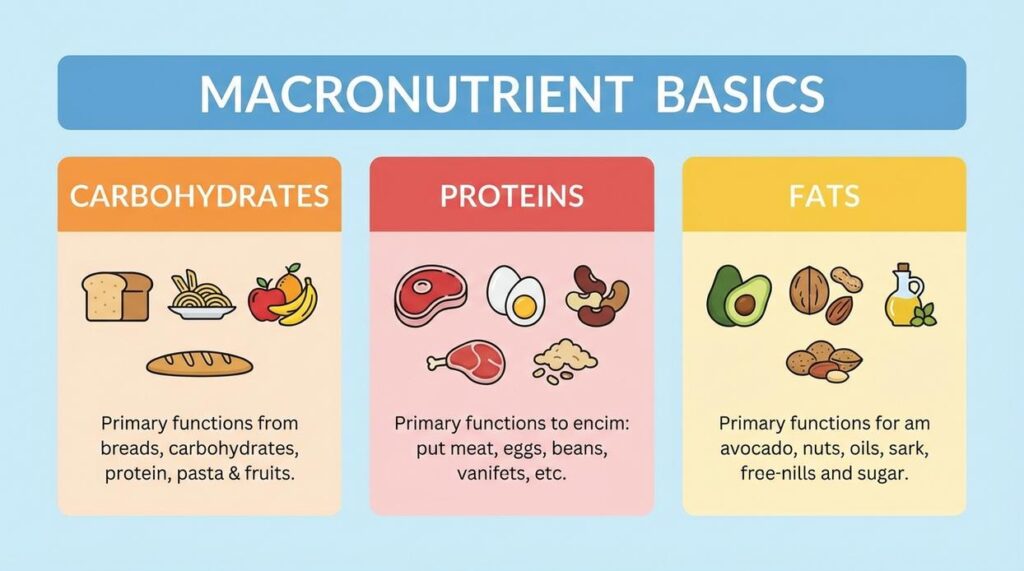
The Core Three: Understanding Protein, Carbs, and Fats
To achieve optimal performance and health through macronutrient balance, incorporating practical strategies, as highlighted in “The Tips And Tricks Wutawhealth,” can make all the difference.

Confused about whether to cut carbs, load up on protein, or avoid fat entirely? Let’s simplify it.
What Is Protein?
Protein is the body’s primary building block. It repairs muscle tissue, supports immune function, and forms enzymes (proteins that speed up chemical reactions in the body). If you’ve ever felt sore after a workout, protein helps rebuild those stressed fibers.
High-quality sources include:
- Lean meats (chicken, turkey)
- Fish (salmon, tuna)
- Eggs
- Legumes (lentils, chickpeas)
Research shows adequate protein intake supports muscle maintenance and metabolic health (Harvard T.H. Chan School of Public Health).
What Are Carbohydrates?
Carbohydrates are your body’s main energy source. They break down into glucose, fueling everything from brain function to workouts.
- Complex carbs (oats, brown rice, vegetables) digest slowly, providing steady energy.
- Simple carbs (sugar, white bread) digest quickly, often causing energy spikes and crashes.
If you’ve ever hit a 3 p.m. slump after a pastry lunch, that’s simple carbs at work.
What Are Fats?
Fats support hormone production, brain health, and absorption of vitamins A, D, E, and K (National Institutes of Health). Healthy sources include:
- Avocados
- Nuts and seeds
- Olive oil
Despite old-school diet culture, fat doesn’t automatically mean weight gain (your brain is nearly 60% fat, after all).
The Synergy
The key isn’t elimination—it’s balance. A practical macronutrient balance guide can help you proportion meals so protein repairs, carbs energize, and fats regulate. Think teamwork, not competition.
From Confusion to Confidence
You came here feeling overwhelmed by conflicting diet advice and one-size-fits-all plans. Now, you have the clarity to move forward with a strategy tailored to your body, your goals, and your lifestyle.
Nutrition doesn’t have to be complicated. What once felt confusing is now simplified into three clear steps: calculate, build, and adjust. That’s the power of following a structured, sustainable approach like this macronutrient balance guide.
Instead of chasing restrictive diets, you’re building a flexible framework that fuels your body and adapts as you progress. That’s why it works—it grows with you.
Don’t wait for the “perfect” time. Calculate your numbers today and plan one balanced meal. Small, consistent steps lead to lasting results—start now and take control of your nutrition.

 Elviana Vosswyn writes the kind of nutrition and recovery approaches content that people actually send to each other. Not because it's flashy or controversial, but because it's the sort of thing where you read it and immediately think of three people who need to see it. Elviana has a talent for identifying the questions that a lot of people have but haven't quite figured out how to articulate yet — and then answering them properly.
They covers a lot of ground: Nutrition and Recovery Approaches, Metabolic Conditioning Insights, Wellness Spotlight Stories, and plenty of adjacent territory that doesn't always get treated with the same seriousness. The consistency across all of it is a certain kind of respect for the reader. Elviana doesn't assume people are stupid, and they doesn't assume they know everything either. They writes for someone who is genuinely trying to figure something out — because that's usually who's actually reading. That assumption shapes everything from how they structures an explanation to how much background they includes before getting to the point.
Beyond the practical stuff, there's something in Elviana's writing that reflects a real investment in the subject — not performed enthusiasm, but the kind of sustained interest that produces insight over time. They has been paying attention to nutrition and recovery approaches long enough that they notices things a more casual observer would miss. That depth shows up in the work in ways that are hard to fake.
Elviana Vosswyn writes the kind of nutrition and recovery approaches content that people actually send to each other. Not because it's flashy or controversial, but because it's the sort of thing where you read it and immediately think of three people who need to see it. Elviana has a talent for identifying the questions that a lot of people have but haven't quite figured out how to articulate yet — and then answering them properly.
They covers a lot of ground: Nutrition and Recovery Approaches, Metabolic Conditioning Insights, Wellness Spotlight Stories, and plenty of adjacent territory that doesn't always get treated with the same seriousness. The consistency across all of it is a certain kind of respect for the reader. Elviana doesn't assume people are stupid, and they doesn't assume they know everything either. They writes for someone who is genuinely trying to figure something out — because that's usually who's actually reading. That assumption shapes everything from how they structures an explanation to how much background they includes before getting to the point.
Beyond the practical stuff, there's something in Elviana's writing that reflects a real investment in the subject — not performed enthusiasm, but the kind of sustained interest that produces insight over time. They has been paying attention to nutrition and recovery approaches long enough that they notices things a more casual observer would miss. That depth shows up in the work in ways that are hard to fake.