
If you’re searching for a smarter, more sustainable way to build muscle, boost endurance, and improve overall fitness without relying on a gym full of equipment, this guide is for you. bodyweight strength training has become one of the most effective and accessible methods for developing functional strength, enhancing mobility, and supporting long-term health — all using your own body as resistance.
In this article, you’ll discover how bodyweight workouts improve metabolic conditioning, support joint stability, and fit seamlessly into any routine, whether you’re a beginner or an experienced athlete. We break down the science behind muscle activation, recovery, and progressive overload, while offering practical strategies you can apply immediately.
Our insights are grounded in current exercise science, performance research, and real-world training methodologies used by coaches and fitness professionals. By the end, you’ll understand not just how to train — but how to train smarter for lasting results.
Unlock Your Strength: The Ultimate Guide to Bodyweight Training
I used to think real strength required barbells, racks, and a pricey membership. Big mistake. I waited months for “perfect conditions” instead of starting. Many people still believe muscle growth demands heavy iron (spoiler: it doesn’t). Research shows progressive overload—gradually increasing demand on muscles—drives growth, even without traditional weights (ACSM, 2022).
Here’s what I learned from failing first:
- Consistency beats equipment
- Tempo and control create intensity
- Progression matters more than load
With bodyweight strength training, you can build functional power anywhere. Start simple. Progress weekly. Stay patient. Results follow.
Why Bodyweight is Your Secret Weapon for Building Muscle
At first glance, lifting heavy barbells seems like the obvious path to size. However, what many programs overlook is how your own mass can become a smarter stimulus. Bodyweight strength training builds muscle while simultaneously improving joint integrity—the structural health of cartilage, tendons, and ligaments that support movement (Harvard Health Publishing, 2022). In other words, you’re not just getting bigger; you’re getting sturdier.
Beyond that, there’s proprioception—your body’s awareness of position in space. When you control a slow push-up or pistol squat, your nervous system recruits more stabilizing fibers, sharpening the mind-muscle connection. That heightened neuromuscular efficiency (how effectively nerves activate muscle fibers) often gets ignored in machine-based routines.
Critics argue you can’t build serious size without external load. Yet progressive overload applies here too—tempo shifts, unilateral moves, and range-of-motion tweaks intensify demand.
Pro tip: Master perfect form before adding reps; control creates resilience.
Ultimately, strength that carries groceries, climbs stairs, and prevents injury beats mirror muscles every time (even if it’s less Instagram flashy).
The Science of Getting Stronger Without Lifting Weights
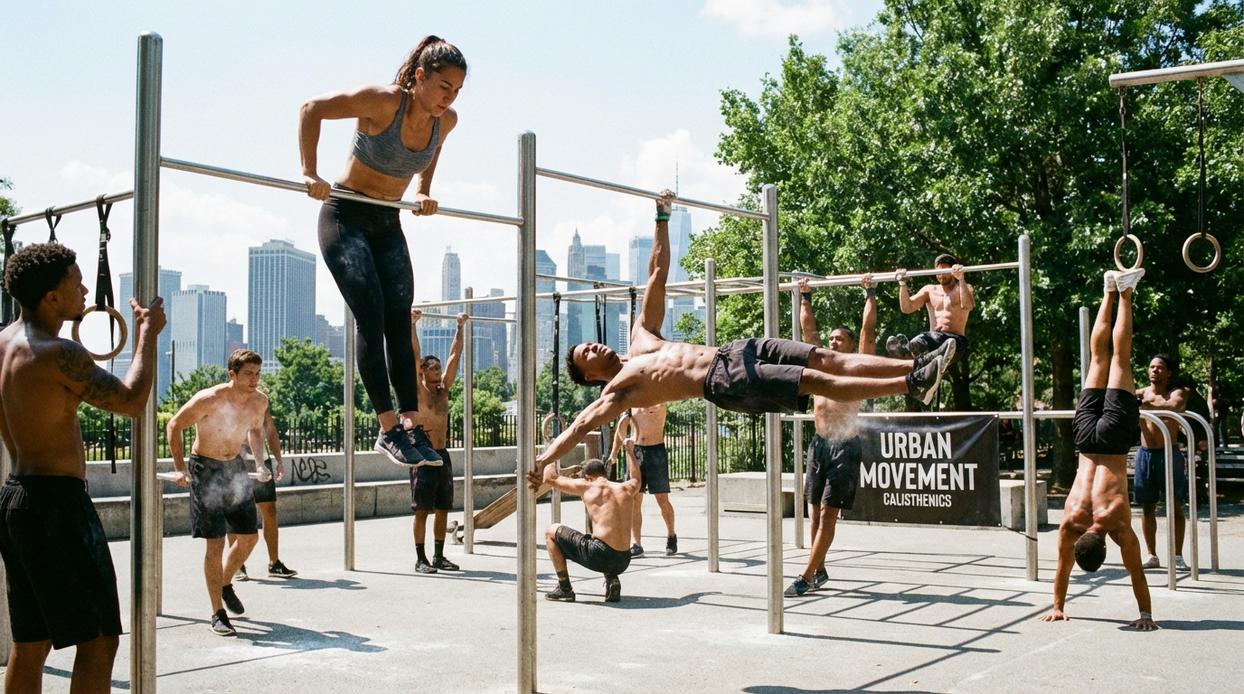
If you want real strength gains without dumbbells or barbells, you need to understand progressive overload. Progressive overload means gradually increasing the stress placed on your muscles so they’re forced to adapt and grow. In traditional gyms, that often means adding weight. In bodyweight strength training, it means manipulating other variables to make movements harder over time.
Some argue you can’t build serious muscle without external resistance. Research disagrees. Studies show muscle growth can occur across a wide range of loads when intensity and effort are high (Schoenfeld, 2017). Translation: challenge matters more than equipment.
Here’s exactly how to apply it:
1. Manipulate Leverage & Angles
Change your body position to increase difficulty. Elevate your feet during push-ups to shift more load onto your chest and shoulders. Progress from standard squats to deep deficit squats. (Think of it as turning the gravity dial up.)
2. Increase Time Under Tension (TUT)
Slow down the eccentric phase—the lowering portion of a rep—to 3–5 seconds. Add 2-second pauses at the bottom. More tension equals more stimulus.
3. Train Unilaterally
Move from two limbs to one. Squats become pistol squats or shrimp squats. This dramatically increases load per limb while improving balance and stability.
4. Boost Volume and Density
Add reps or sets weekly. Or shorten rest periods to increase training density. Pro tip: reduce rest by 10–15 seconds each week for steady progression.
You don’t need plates to get powerful. You need progression. Even Batman trained with intention.
The 5 Foundational Movements for a Full-Body Workout
If you want a routine that actually works, focus on patterns—not gimmicks. These five foundational movements train every major muscle group efficiently. Master them, and you’ll build strength that carries into real life (like hauling groceries without feeling dramatic about it).
1. The Push-Up (Upper Body Push)
The push-up trains your chest, shoulders, and triceps while reinforcing core tension. Keep hands under shoulders, elbows at roughly 45 degrees, and avoid flaring them wide to protect your shoulders.
Progression path:
- Wall Push-ups
- Incline Push-ups
- Knee Push-ups
- Full Push-ups
- Diamond Push-ups
Recommendation: Start easier than you think. Clean reps beat ego reps every time.
2. The Inverted Row (Upper Body Pull)
Pulling balances pushing. Use a sturdy table or parallel bars. Keep your body straight and pull your chest toward the edge.
Progression path:
- Bent-knee Rows
- Straight-leg Rows
- Feet-elevated Rows
If you skip pulling movements, shoulder discomfort often follows (ask any desk worker).
3. The Squat (Lower Body Push)
Squats build quads and glutes while improving mobility. Sit back and down, keep knees tracking over toes, and reach proper depth—hips below knees if possible.
Progression path:
- Bodyweight Squats
- Pause Squats
- Jump Squats
- Pistol Squat progressions
4. The Glute Bridge (Posterior Chain)
This targets glutes and hamstrings. Squeeze at the top and avoid arching your lower back.
Progression path:
- Standard Glute Bridge
- Marching Bridge
- Single-leg Glute Bridge
5. The Plank (Core Stability)
Maintain a straight line from head to heels. No sagging hips.
Progression path:
- Knee Plank
- Standard Plank
- Plank with Limb Lifts
- Side Plank
For steady improvement, apply principles from progressive overload explained the key to long term strength gains.
Stick to these five moves, train them consistently, and prioritize form. That’s the foundation of effective bodyweight strength training.
Your First Month’s Bodyweight Strength Plan
When I started training in my living room, I overcomplicated everything. Eventually, I learned simpler works.
Here’s a clean template for your first month of bodyweight strength training.
Train three days per week—Monday, Wednesday, Friday—resting between sessions. Each workout, perform five foundational movements: push, pull, squat, hinge, and core stability. Do 3 sets of 5–8 reps each, prioritizing perfect form (film yourself; it helps).
Each week, add one rep per set before progressing to a harder variation.
Pro tip: if form slips, you’ve progressed too soon. Slow, steady gains build real strength safely.
Start Building Your Strongest Self Today
Your body is the only gym you’ll ever truly own. The idea that you need machines or heavy weights to get strong is a myth. Research published in the Journal of Strength and Conditioning Research shows that progressive overload—gradually increasing difficulty—drives muscle growth, even without equipment. That’s the foundation of bodyweight strength training.
• Consistency beats complexity. Studies from Harvard Health confirm regular resistance exercise improves muscle mass, metabolism, and bone density.
The barrier isn’t equipment. It’s application. Commit to the First Month’s Plan. Master the basics. Progress weekly. Your strongest self starts now.
Build Strength That Lasts
You came here looking for a smarter, more sustainable way to build strength, boost endurance, and support your overall wellness. Now you know that bodyweight strength training isn’t just convenient — it’s one of the most effective ways to build lean muscle, improve mobility, and condition your metabolism without expensive equipment or complicated routines.
If you’ve been frustrated by inconsistent results, lack of time, or workouts that leave you drained instead of energized, this is your turning point. The right strategy makes all the difference.
Start small. Choose three foundational movements. Commit to consistency. Track your progress. Let progressive overload and recovery do their work.
And if you’re ready for a structured plan that eliminates guesswork and accelerates results, explore our proven weekly training blueprints trusted by thousands of wellness-focused readers. Don’t let another month go by feeling stuck.
Take action today, commit to the process, and build the strength your future self will thank you for.
